
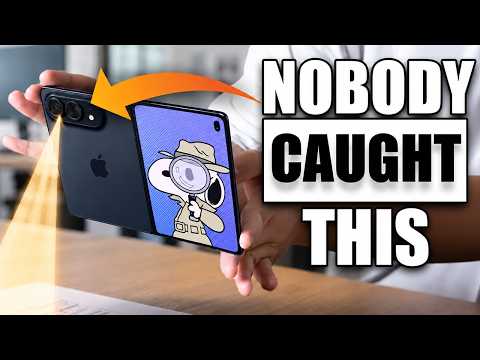
Discover hidden iPhone DUO features and secret tricks that Apple never highlights! Whether you use two apps side-by-side or combine native iOS tools to boost your workflow, these setup hacks and shortcut combinations will take your iPhone experience to the next level.
If you find this helpful, don’t forget to leave a like and subscribe to HotshotTek for more iPhone tips, hidden tricks, and tech tutorials!
iPhone Duo Case in video link –
⏱️ Timestamps:
00:00 – Intro
00:27 – Split Screen Multitasking & App Pairing
02:08 – Non-Supported Apps & Privacy Mode
04:02 – Hidden Status Bar Shortcut
04:45 – Split Keyboard & Laptop Mode
05:31 – Dual Preview & Kid Cue Camera Features
06:42 – Shift Display Edge (Bulky Case Fix)
07:59 – Rest Finger to Unlock Setting
09:05 – Tabletop Standby Mode
09:51 – Nintendo DS Emulator Setup & Outro
Other video run gameboy games –
📲 Follow Me for Behind the Scenes on Social Media:
Instagram: @eddien7
X: @HOTSHOTN7
Twitch: @hotshot2ss
🔥 Exclusive Viewer Promotions and Discount Codes! 🔥
Try Audible and Get TWO FREE Audiobooks!:
Try Amazon Prime 30-Day FREE TRIAL:
Amazon FreeTime Unlimited FREE Trial:
🎥 Equipment Used in This Video:
Chair by Secretlab:
Microphone: DJI Mic –
Camera: Sony Alpha A6600 –
Disclaimer: Our links may be affiliated with Amazon and other stores. To find out more, click here:


It’s amazing seeing iPhone users see and use a foldable phone, it’s like a cave man 🙈 seeing 🔥 fire for the very first time 😂😂😂.
9:21 it doesn’t need to be plugged in bra.
While a hinge cover on an iPhone Duo case acts as a physical shield against drops and large particles, it can inadvertently trap fine grit, sand, and pocket lint against the phone’s spine. If debris gets caught between the moving cover and the phone, the friction from opening and closing the device can cause cosmetic scratches or even push the grit deeper into the hinge mechanism. Conversely, leaving the hinge exposed allows for easy cleaning and inspection, but it offers no barrier against everyday pocket debris and dust from working their way inside over time.
HOW DEBRIS INTERACTS WITH HINGE CASES
The hinge is the most complex moving part of a foldable phone, and fine particles are its primary enemy. How you choose to protect it involves a trade-off between shielding the spine and managing the buildup of dirt.
CASE STYLE
HOW IT HANDLES DEBRIS
PROS
CONS
With Hinge Protection
Covers the spine with a sliding or rigid shield.
Blocks large particles, lint, and direct impacts.
Can trap fine grit inside the cover, potentially scratching the spine or jamming the fold.
Without Hinge Protection
Leaves the hinge entirely exposed.
Easy to inspect and wipe clean; no hidden cavities for dirt to hide.
Offers no defense against pocket dust, sand, or accidental drops directly onto the spine.
BEST PRACTICES FOR MANAGING DEBRIS
Regardless of the case style you choose, no design can completely seal a moving hinge. To keep your device functioning smoothly:
Wipe it down: Gently clean the exterior of the hinge with a dry microfiber cloth regularly.
Avoid gritty environments: Keep the phone out of sandy or excessively dusty pockets and bags.
Never poke inside: If you feel resistance when folding, do not insert tools, brushes, or compressed air into the hinge gap, as this can push debris deeper.
Inspect periodically: If you use a case with a hinge cover, remove it occasionally to clean out any trapped dust or grit that may have accumulated underneath.
There is no such thing as a click and drag on a phone….
All you tech people, as you call yourself, should know this…
Haven’t gotten mine yet. Really excited. quick question though? If you’re scrolling on two different apps, on two different sides of the screen at the same time, how does it know which one to play the audio for, or do they both play simultaneously over each other